
There are places in Peru that make you wonder if the world has been keeping secrets from you. Ausangate’s Seven Lakes is one of them.
It’s a tucked-away pocket of high altitude magic where the colors look painted, the air feels ancient, and the silence is so silent it almost hums. It’s the kind of experience that doesn’t just impress you, far from it. It stays with you, lodged somewhere deep in your memory, and comes back to remind you of your adventure from time to time.
If you’re exploring Cusco and craving something spectacular but surprisingly easy to reach, Ausangate’s Seven Lakes deserves a firm spot on your “must-do” list. It’s a little wild, a little challenging, and absolutely awesome.
Let us take you there.
Table of Contents
A Different Side Of The Andes
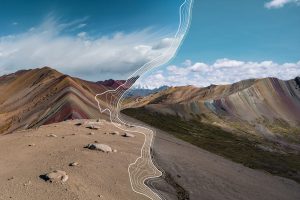
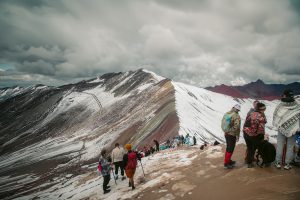
When most travelers hear “Andes”, they picture Machu Picchu, Salkantay, or the technicolor glory of Rainbow Mountain. Those destinations are iconic, and for good reason, but none of them quite capture the raw, untouched, icy grandeur of the Ausangate region.
Ausangate (Ausangate Apu, to use its respectful Quechua name) is one of the most sacred mountains in the Andes. Locals view it as a living spirit, a wise protector, and giver of life and water. And honestly? Spend a day beneath its towering glaciers, and you’ll understand why. It feels alive. You feel tiny. And that’s all part of the charm.
The Seven Lakes hike gives you a taste of this big-mountain wilderness without committing to the multi-day Ausangate circuit. It’s a little like the highlight reel, condensed into a single spectacular day out.
So, Where Exactly Are These Lakes?
The Seven Lakes (aka the “7 Lagunas de Ausangate”) sit just beyond the small, high-altitude Quechua village of Pacchanta. It’s about a 3-hour drive from Cusco, and the journey there feels like you’re leaving the world as you know it behind.
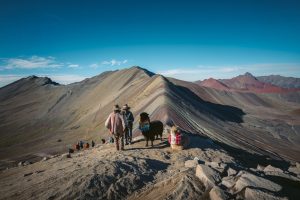
The city noise fades. The houses thin out. Fields of quinoa appear. And slowly the scenery shifts into that wild, windswept, high-Andean tundra known as the ‘puna’. Expect golden grasses, icy blue sky, and cute alpacas with their pompoms swaying dramatically in the breeze. (A reminder: never underestimate a Peruvian alpaca’s style.)
Pacchanta itself is pretty low-key. Rustic, cozy, high up, and absolutely framed by Ausangate’s snow-capped bulk. The village is also known for its thermal pools. There’ll be more on that later.
The hike begins right from the community and climbs gently into the hills, weaving past wetlands, grazing alpacas, tiny stone huts, and eventually… the gems you came for. Those awe-inspiring seven lakes.
What Makes The Seven Lakes Special?
These lakes are absurdly colorful. Like, “have I accidentally walked into a Pixar film?” levels of colorful.
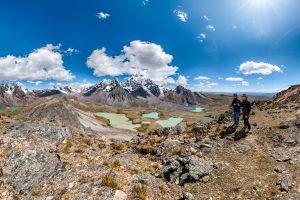
Their hues come from different minerals in the glacial water, including copper, iron, sulphur, and calcium carbonate, with each creating a unique tone. Add to this the way these colors shift when the clouds move, or the sun comes out, and the whole hike feels like watching nature adjust the saturation settings in real time.
Here’s a quick tour of the legendary seven:
1. Orco Otorongo
Deep, moody, and almost ink-black. The name means “jaguar”, and honestly? It does feel a bit like something mysterious could be lurking under the surface.
2. China Otorongo
Slightly lighter than its counterpart, but still brooding, like the mountain’s reflecting pool.
3. Pucacocha
“Puca” means red in Quechua, but the lake itself isn’t fire-engine red. Think more subtle coppery undertones that appear when the light hits at a slant.
4. Alqacocha
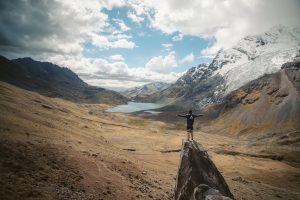
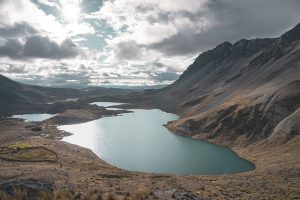
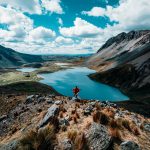
Possibly the most photogenic of the bunch. It’s a shimmering turquoise pool encircled by jagged ridges.
5. Comercocha
This one’s a vibrant green beauty that sits quietly beneath Ausangate’s glacier walls.
6. Patacocha
Small but dazzling, with that pure, clean glacial-blue glow.
7. Azulcocha
As the name suggests, this one is all about blue (azul means blue in Spanish, by the way). Think crisp, icy, immaculate.
Seeing one colorful lake in the Andes is special. Seeing seven, each completely different, each framed by enormous glacier-capped peaks, is… well, it’s magical.
What The Hike Is Actually Like
Let’s talk honestly. This trek is not technically hard, but the altitude is the main challenge here.
The trail begins at 4,100 m / 13,451 ft and tops out at 4,800 m / 15,748 ft. If the altitude ever makes you feel like you’ve aged forty years in five minutes, remember: it’s not you, it’s the oxygen.
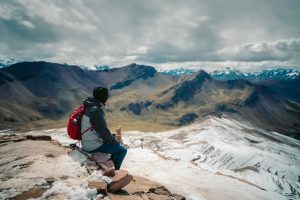
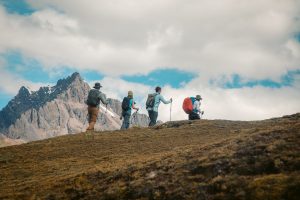
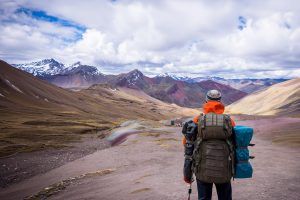
The path itself is gentle, rolling, and straightforward. It’s more of a scenic wander than a hardcore climb. Along the way, you’ll pass:
- Meadows dotted with wildflowers
- Flocks of alpacas who absolutely know they’re photogenic
- Tiny homes of high-Andean herders
- Patches of pure, icy meltwater
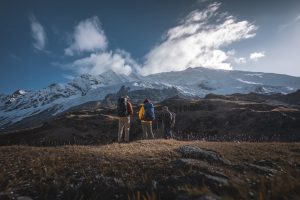
- Massive snow peaks that look close enough to touch
You can do it in roughly 3-4 hours at a relaxed pace. And that’s the key. Going slow. Enjoying the altitude rather than fighting it.
Top tip: walk like you’re touring an art gallery. Take a few steps, stop, admire, breathe. Repeat. It makes the whole experience a whole lot more enjoyable.
If walking at altitude sounds intimidating, you can also rent a horse in Pacchanta. A perfectly valid and very Andean-approved option.
The Silence (Yes, It Gets Its Own Section)
There’s something almost spiritual about how quiet the Ausangate region is.
You don’t realize how loud daily life is until you find yourself standing beside a glassy teal lake, surrounded by nothing but rock, ice, alpacas, wind, and your own breath.
No traffic. No vendors. No city hum. Just the mountain.
It’s calming, grounding, and slightly addictive.
Wildlife & Andean Culture Along The Route
One of our favorite things about the Seven Lakes is that the region isn’t just natural beauty. It’s a living, breathing cultural landscape.
You’ll likely see:
- Alpacas and llamas grazing in herds
- Vizcachas, which look like long-eared rabbits who’ve had a stylish makeover
- Andean geese gliding over the wetlands
- Herders in traditional clothing, often carrying bundles of grass or leading their animals
- Children offering a shy “Buenos días” before running off giggling
Many families here live in tiny stone houses, relying on alpaca wool and local crops. When you pay the community fee to access the trail, it goes directly to supporting them. It’s a small but meaningful way to preserve this extraordinary region.
What To Pack For Your Day Out
Even if the day begins sunny, Ausangate weather changes faster than your plans on a Friday night. Here’s what you definitely want to take with you:
- Warm layers: fleece + down jacket + windbreaker
- Hat & gloves: the breeze can be Arctic-level cold, especially in June and July
- High SPF sunscreen: altitude sun is not your friend
- Plenty of water: hydration is your superpower at 4,800 meters
- Snacks: chocolate, fruit, nuts; all excellent energy and morale boosters
- Cash: for community fees (usually 10-20 soles)
- Swimwear & towel: for those heavenly Pacchanta hot springs afterward
Optional but delightful:
- A thermos of coca tea
- A buff or scarf for wind protection
- Trekking poles (great for saving your knees on the descent if you need them)
The Pacchanta Hot Springs: A Perfect Ending
Once you return to the village, with your legs pleasantly tired and cheeks glowing from wind and altitude, it’s time for Pacchanta’s medicinal pools.
They’re warm. They’re soothing. They smell faintly of minerals in that earthy, spa-like way. And they offer a front-row view of Ausangate itself, looming above you.
Honestly, it’s bliss. You may even start to question every life decision that led to you not to come here sooner.
Should You Do The Seven Lakes?
If you love quiet trails, mountain panoramas, surreal colors, meaningful community experiences, and places that feel untouched… then absolutely yes.
The Seven Lakes are one of the Andes’ true hidden gems. They’re dramatic without being overrun, challenging enough to feel rewarding but accessible enough for most travellers, and bursting with scenery that feels almost otherworldly.
It’s the kind of day trip that leaves you glowing for days afterward.

Leave A Reply