
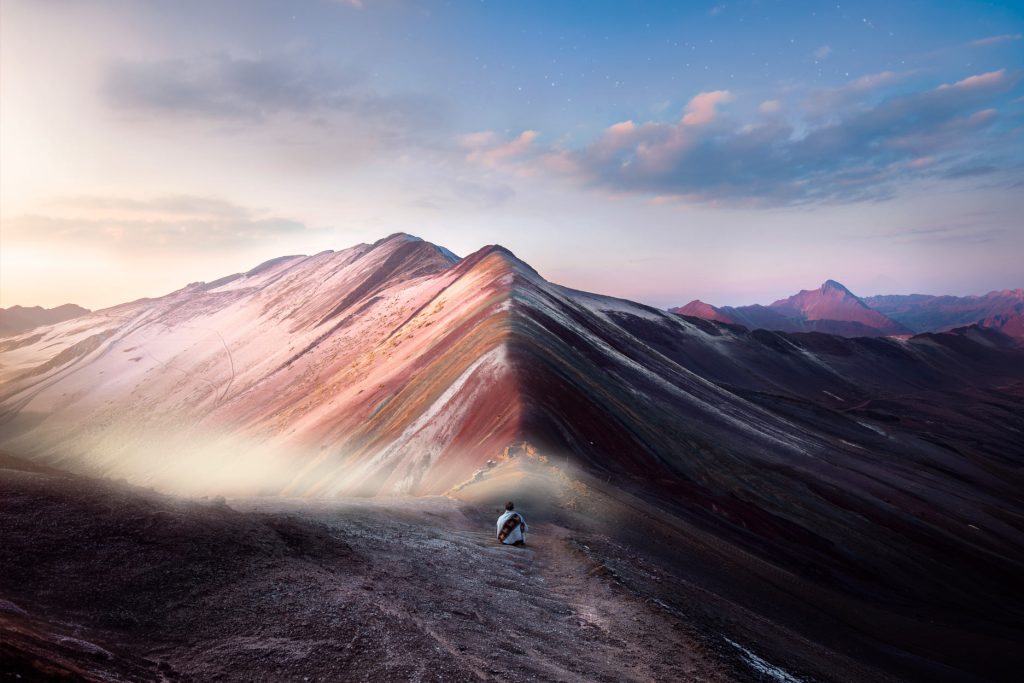
There are moments when you travel that quietly rewire you. The kind you don’t fully process until much later. Maybe while scrolling through photos. Maybe while back home, explaining it to someone who wasn’t there. Standing looking out over a Rainbow Mountain sunrise is one of those moments.
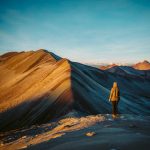
The air is thin and crisp. The Andes feel impossibly vast. And then, slowly, almost as if it’s teasing you, the sun begins to rise. Shadows stretch, colors wake up, and suddenly the mountain looks like something painted by nature on a particularly show-offy day. It’s not just a hike. It’s a wow, I’m really here experience that lingers long after you’ve arrived back home.
This guide dives deep into why sunrise at Rainbow Mountain (also known as Vinicunca) is so special, what makes it feel genuinely transformative, and how to experience it in a way that’s rewarding rather than rushed. Don’t worry. No spoilers. Just enough insight to make you even more excited to get on the next flight to Peru.
Table of Contents
What Makes Rainbow Mountain So Extraordinary?
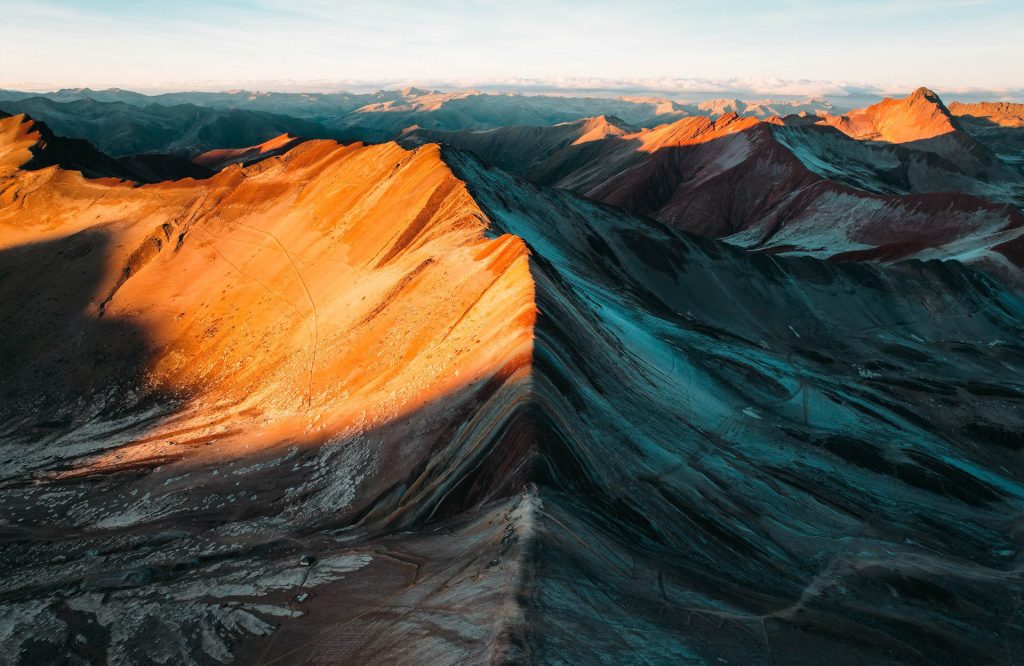
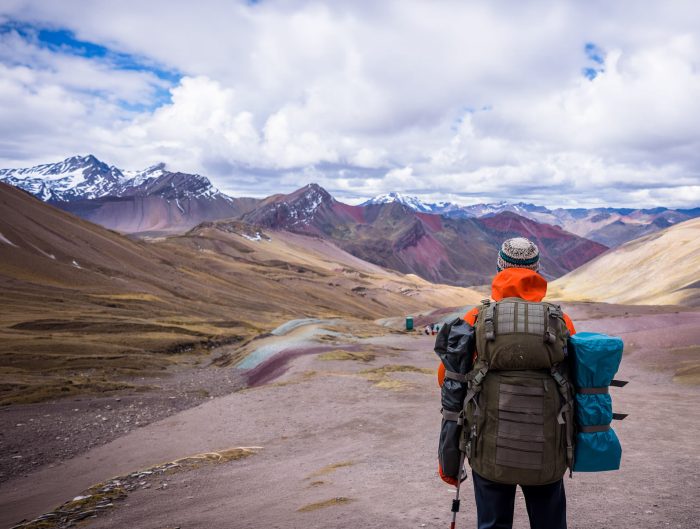
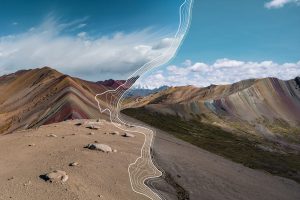
Rainbow Mountain’s surreal stripes aren’t a trick of the light or clever photo editing. Don’t be fooled. They’re the result of millions of years of mineral deposits, including iron, copper, and sulfur, layered and exposed as the glaciers retreated.
The reds come from iron oxide. The yellows and golds from sulfur-rich minerals. Greens and blues from copper and other compounds.
But while the mountain is stunning at any hour, sunrise transforms it. The low angle of the sun enhances contrast, softens shadows, and brings out depth in the colors that start to become a little flatter in the midday light. The result feels richer, warmer, and, somehow, more intimate.
Why Sunrise Is The Ultimate Way To Experience It
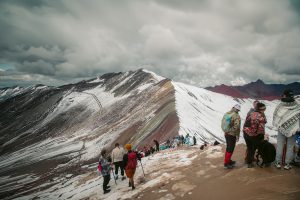
Rainbow Mountain is no secret anymore. By late morning, the trail can feel lively, energetic, and busy. Sunrise, on the other hand, feels like you’re arriving before the world fully wakes up.
The early hours bring a sense of calm that’s hard to replicate later in the day. Fewer voices. Fewer distractions. More time to absorb where you are.
Here are our sunrise advantages, summed up:
- Significantly fewer crowds
- Softer, more dramatic lighting for photos
- A quieter, more reflective atmosphere
- Cooler temperatures for hiking
- Serious “we earned this” energy
Yes, the alarm clock is brutal. But no one ever regrets the view.
The Altitude Factor: Challenging But Manageable
Let’s not sugarcoat it: Rainbow Mountain sits at approximately 16,732 feet (5,100 meters) above sea level. That’s higher than many people have ever been in their lives. The altitude is real, and it deserves respect.
That said, sunrise hikes often move at a slower, more deliberate pace, which actually works in your favor. Your body has time to adjust, your breathing stays steadier, and the gradual change in light makes the climb feel less intense.
Common sensations can include shortness of breath, fatigue, or a mild headache, but these are often reduced with proper acclimatization beforehand.
Quick and helpful altitude tips:
- Spend a few days at altitude before the hike (in Cusco or the Sacred Valley)
- Stay well hydrated
- Avoid alcohol for the day or two before
- Eat light, energy-rich foods
- Walk slowly (this is not a race)
The reward at the top? A view that makes every step feel justified.
The Quiet Power Of The Morning
There’s something undeniably special about being in the mountains at dawn. The world feels like someone hit pause. Sound carries differently. Even your thoughts seem quieter.
At sunrise, Rainbow Mountain feels less like a headline attraction and more like a personal encounter. You notice the frost on the ground. The way the light creeps across distant peaks. The subtle color changes that happen minute by minute.
This is often when people stop talking. Not because they’re exhausted (though that may play a role), but because the moment asks for stillness.
It’s the acoustic version of Rainbow Mountain. And it hits deep.
When Is The Best Time To Go?
Timing matters, especially for a sunrise experience.
Dry Season: May To September
This is generally considered the best window.
- Clearer skies
- Brighter, more defined colors
- More consistent sunrise views
Mornings are cold (sometimes very cold), but conditions are generally stable.
Rainy Season: November To March
This period offers a different kind of beauty.
- Fewer visitors
- Lush surrounding landscapes
- Occasional snow, which can soften or partially cover the colors
Sunrise views are still possible, though cloud cover is more unpredictable. When it clears, the mountain feels especially dramatic.
Shoulder Season: April & October
Often overlooked, the shoulder months can be a sweet spot for a sunrise visit.
- Fewer crowds than peak dry season
- A mix of clear mornings and lingering greenery
- Milder conditions than the middle of winter
Weather can be a little changeable, but when conditions are right, sunrise during the shoulder season delivers vibrant colors, quieter trails, and that best-of-both-worlds feeling seasoned travelers love.
No matter the season, sunrise means layers. It’s going to be cold. Think insulated jacket, gloves, hat, and proper footwear. Looking cute is optional. Feeling your fingers is not.
What To Expect On A Sunrise Hike
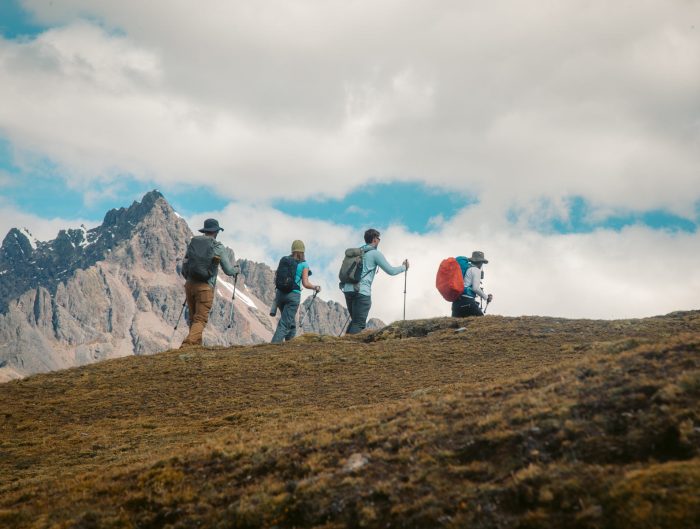
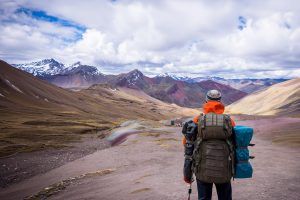
Most sunrise experiences start early. Very early. Think pre-dawn departures and headlights cutting through darkness.
As you approach the trail, the sky begins to lighten. Stars fade. The horizon starts to develop some color. The final stretch of the hike unfolds just as the sun begins to rise.
Reaching the viewpoint at this moment feels like you earned it. You’re warm from the climb, awake in every sense, and completely present.
And then the colors appear.
Not all at once. Slowly. Like the mountain is revealing them on its own schedule.
More Than A Photo Opportunity
Yes, Rainbow Mountain is wildly photogenic. But visiting at sunrise isn’t just about getting the perfect shot.
It’s about perspective. Imagine standing in a vast landscape that’s been forming for millions of years, realizing how small (and how lucky) you are.
It’s about effort. Earning a moment rather than simply being taken there.
And it’s about being present. Being fully there, without feeling rushed, without noise, without distraction.
Many travelers describe leaving Rainbow Mountain at sunrise feeling calmer, more grounded, and oddly energized all at once. You may get tired legs, but you’ll have a full heart and a warm soul.
A Moment That Stays With You
Long after the hike ends, people tend to remember the quiet details. The cold air in their lungs, the first sign of color on the mountainside, the shared smiles with strangers who also woke up far too early. Seriously, you won’t be forgetting that pre-dawn journey.
Rainbow Mountain at sunrise isn’t just something you see. It’s something you feel.
It’s a reminder that some of the most powerful experiences require a little discomfort, a little effort, and a very early alarm. Sorry we keep going on about it, but you’ll see what we mean.
See Rainbow Mountain Before The Sun Gets Too High
Rainbow Mountain at sunrise isn’t about ticking off a must-see destination. It’s about timing, intention, and visiting a natural wonder in the most meaningful way possible.
Set the alarm. Embrace the cold. Walk slowly. Look up often.
The Andes will do the rest.
And trust us. This is one sunrise you’ll carry with you long after you return home. Probably all of your life if we’re completely honest.

You might also like
Leave A Reply