
The Ausangate and Rainbow Mountain Trek is one of the most impressive high-altitude adventures in Peru. Instead of visiting Rainbow Mountain on a short day trip from Cusco, this route takes you deep into the Andes, where glaciers, turquoise lakes, high mountain passes, alpaca herds, remote communities, and colorful valleys become part of the journey.
This Ausangate adventure combines the wild landscapes surrounding Ausangate Mountain with one of Peru’s most famous natural attractions: Rainbow Mountain, also known as Vinicunca.
Over four days, you’ll hike through remote Andean scenery, cross elevations above 5,000 meters, experience the silence of the mountains, and finally reach Rainbow Mountain after exploring much more of the region.
If you’re looking for more than a quick photo stop, the Ausangate and Rainbow Mountain Trek offers one of the most complete trekking experiences near Cusco.
Table of Contents
Why Combine Ausangate and Rainbow Mountain?
Ausangate Mountain and Rainbow Mountain are often visited separately, but hiking them as part of the same route creates a completely different experience.
Rainbow Mountain is famous for its colorful mineral layers, while the Ausangate Trek is known for glaciers, high-altitude lakes, huge mountain landscapes, alpacas, and traditional Andean communities.
Combining both destinations allows you to experience the region gradually instead of arriving at Rainbow Mountain, taking a photograph, and returning immediately to Cusco.
During the trek, you’ll discover:
- Snow-covered mountains
- Turquoise glacial lakes
- High Andean valleys
- Alpacas, llamas, and vicuñas
- Remote Quechua communities
- Colorful mountains
- Rainbow Mountain
- Red Valley
- Views of the Vilcanota Mountain Range
Rainbow Mountain becomes one highlight of a much larger Ausangate adventure.
Ausangate and Rainbow Mountain Trek Overview
The 4-day Ausangate and Rainbow Mountain Trek is designed for travelers who want a real mountain experience in the Peruvian Andes.
Quick Trek Facts
- Duration: 4 days / 3 nights
- Region: Cusco, Peru
- Difficulty: Moderate to challenging
- Maximum altitude: Approximately 5,100 m / 16,732 ft
- Main attractions: Ausangate Mountain, glacial lakes, Rainbow Mountain and Red Valley
- Recommended acclimatization: 2–3 days in Cusco
- Best for: Hikers, mountain lovers, photographers and adventure travelers
Most of the route takes place above 4,000 meters / 13,123 feet, making proper acclimatization especially important before beginning the trek.
What Is the Ausangate and Rainbow Mountain Trek Like?
Every day on the trail introduces a different side of the Andes.
Unlike routes built around a single attraction, the Ausangate Rainbow Mountain Trek constantly changes. Mountains lead to valleys, valleys open onto glacial lakes, and high passes reveal new views of the Vilcanota Mountain Range.
Here is what you can expect from a typical 4-day itinerary.
Day 1: Enter the Ausangate Region
Your journey begins with an early departure from Cusco toward the high Andes.
As you leave the city behind, the scenery changes quickly. Agricultural valleys gradually give way to open grasslands and towering mountains.
The first section of the hike allows you to begin adapting to the terrain while enjoying your first views of Ausangate Mountain.
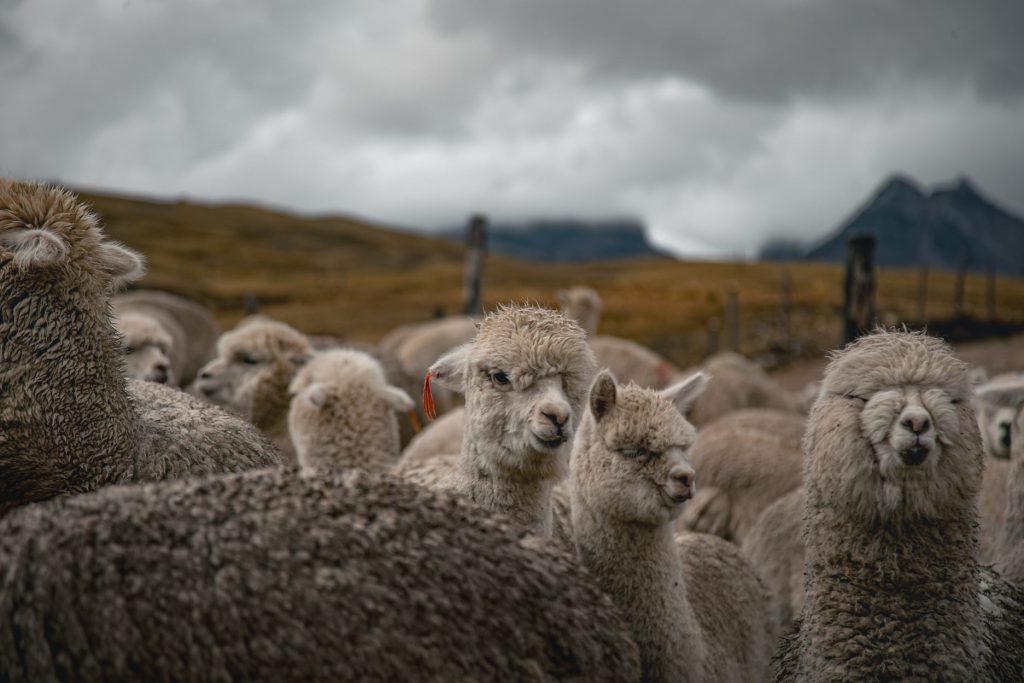
Along the way, you’ll likely see:
- Alpacas and llamas
- Traditional Andean communities
- Open mountain valleys
- Snow-covered peaks
- High-altitude landscapes
You’ll spend your first night surrounded by the mountains, far from the noise of the city.
Day 2: High Mountain Passes and Glacial Lakes
The second day brings you deeper into the Ausangate trekking route.
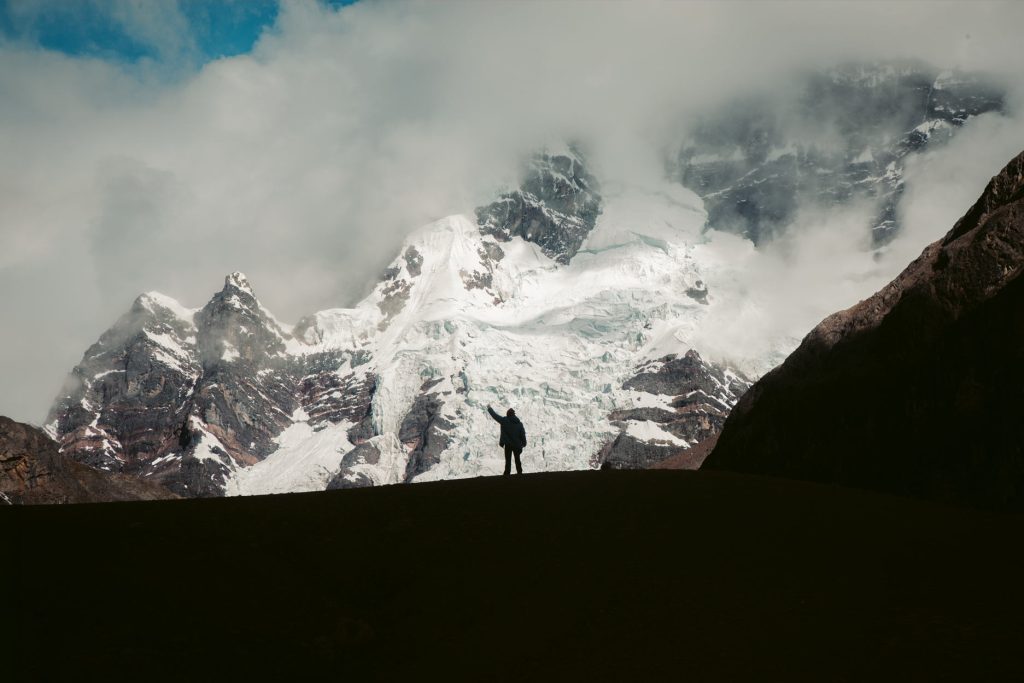
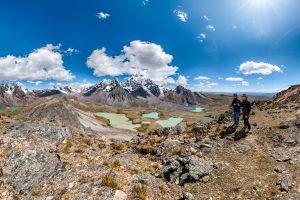
You’ll climb through high mountain passes surrounded by glaciers and turquoise lakes. The altitude makes the hiking more demanding, but the landscape becomes increasingly impressive.
Some of the day’s highlights can include:
- Glacial lagoons
- Views of Ausangate
- High-altitude passes
- Alpaca herds
- Remote valleys
- Panoramic views of the Andes
This is where the scale of the Ausangate region becomes clear.
The mountains dominate the horizon, and there are long sections of trail where very little separates you from the surrounding wilderness.
Day 3: Approaching Rainbow Mountain
As the route continues, the colors of the landscape begin to change.
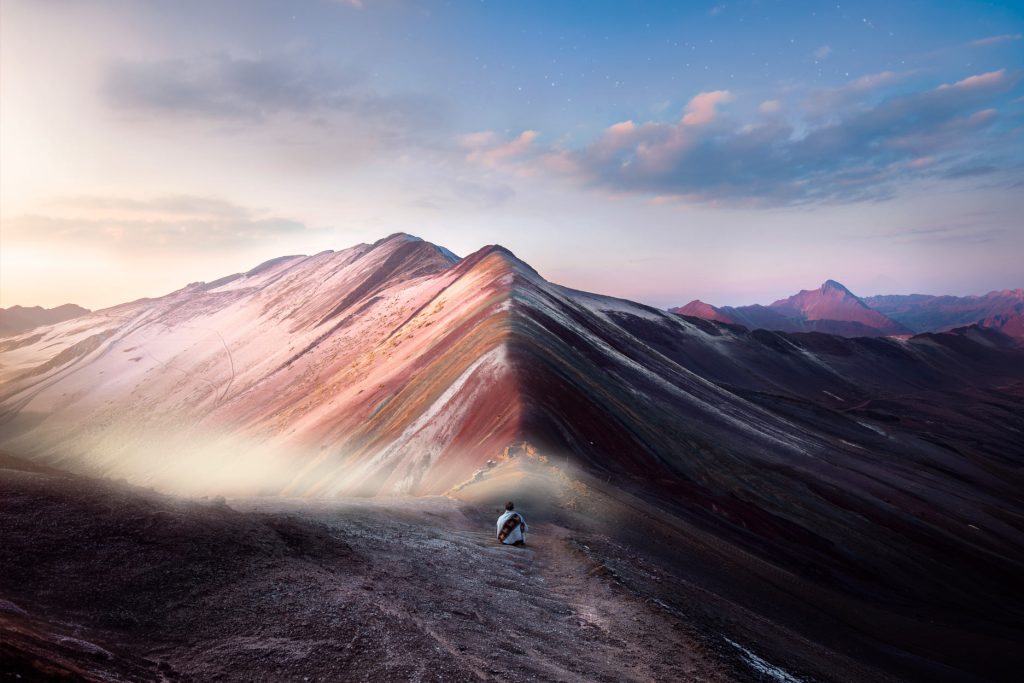
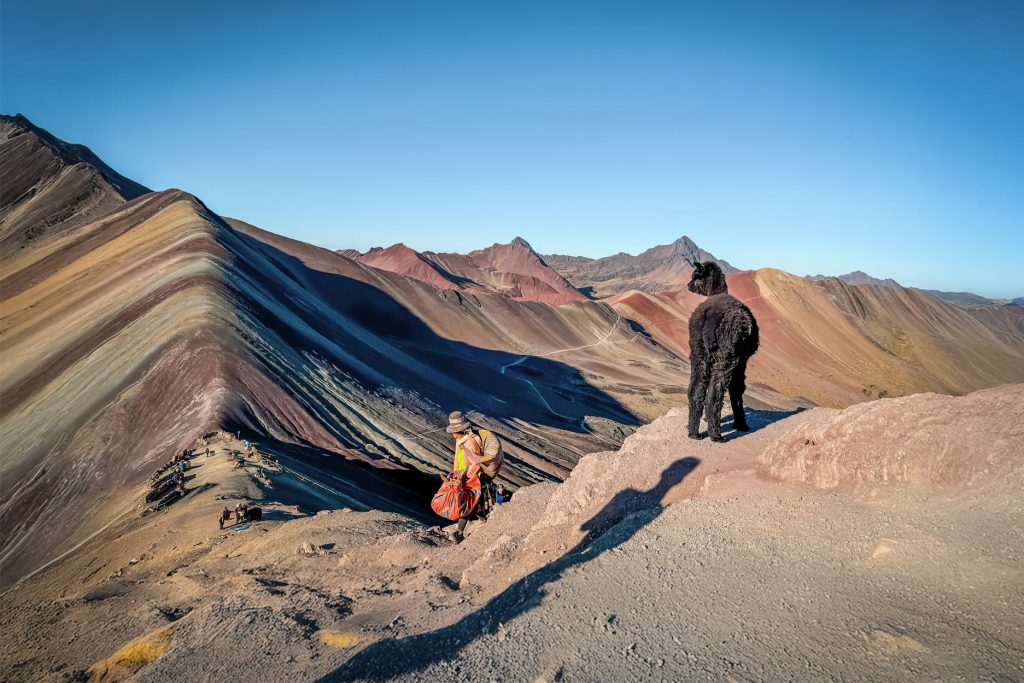
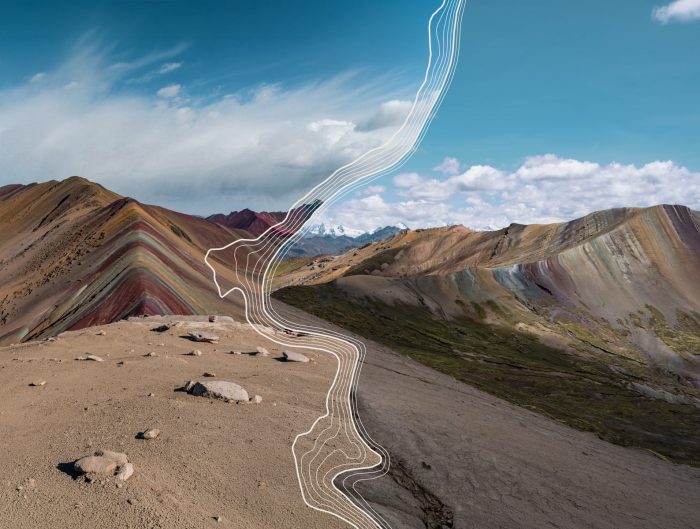
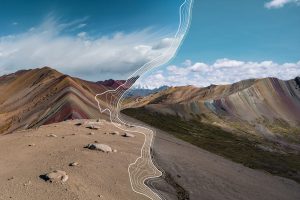
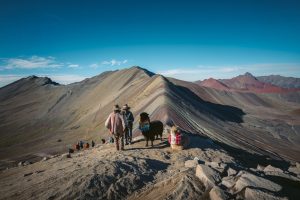
Brown, red, yellow, green, and ochre tones appear across the mountains as you move closer to Rainbow Mountain Peru.
Unlike visitors arriving on a standard day tour, trekkers approach Vinicunca after several days in the mountains.
This creates a very different experience.
Instead of Rainbow Mountain being the entire journey, it becomes the natural continuation of your trek through Ausangate.
Depending on the route and departure time, you may also have opportunities to experience the area during quieter periods of the day.
Day 4: Rainbow Mountain and Red Valley
The final day brings one of the most anticipated moments of the Ausangate and Rainbow Mountain Trek.
You wake early and continue toward Rainbow Mountain, or Vinicunca, one of the most recognizable landscapes in Peru.
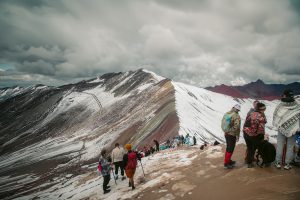
From the viewpoint, you’ll see the mountain’s famous mineral-colored slopes as well as wide views across the surrounding Andes.
The adventure can also continue toward Red Valley, where deep red mountains and open high-altitude terrain create another completely different landscape.
After exploring the area, you’ll begin your descent and eventually return toward Cusco.
It’s the end of four days of hiking, but also the culmination of a much larger journey through the Ausangate region.
How Difficult Is the Ausangate and Rainbow Mountain Trek?
The Ausangate and Rainbow Mountain Trek is considered moderate to challenging, mainly because of its altitude.
The route does not usually require technical climbing skills, but trekkers spend much of the journey above 4,000 meters / 13,123 feet and can cross elevations above 5,000 meters / 16,404 feet.
At these elevations, even relatively simple climbs can feel demanding.
Expect:
- Long hiking days
- Steep ascents and descents
- Thin air
- Cold temperatures
- Strong sunlight
- Rapid weather changes
Good physical conditioning helps, but acclimatization is just as important.
Acclimatization Before the Ausangate Trek
Spending time at altitude before starting your trek is highly recommended.
Try to spend at least 2–3 days in Cusco or another high-altitude destination before beginning your Ausangate adventure.
During this period:
- Drink plenty of water
- Avoid intense exercise on your first day
- Eat light but nutritious meals
- Sleep properly
- Take short acclimatization walks
- Listen to your body
Being physically fit does not guarantee immunity from altitude sickness, so gradual acclimatization remains important.
What Makes the Ausangate Trek Special?
The Ausangate region feels very different from many of Peru’s most famous trekking destinations.
Here, the main attraction isn’t archaeological ruins.
It’s the landscape itself.
The route passes through an environment shaped by glaciers, mountains, lakes, high grasslands, and centuries of life in the Andes.
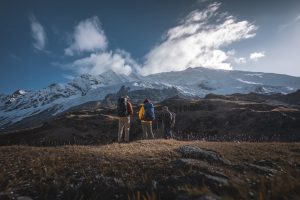
Ausangate Mountain
Standing at approximately 6,384 meters / 20,945 feet, Ausangate is one of Peru’s highest mountains and an important sacred mountain, or Apu, for communities in the Cusco region.
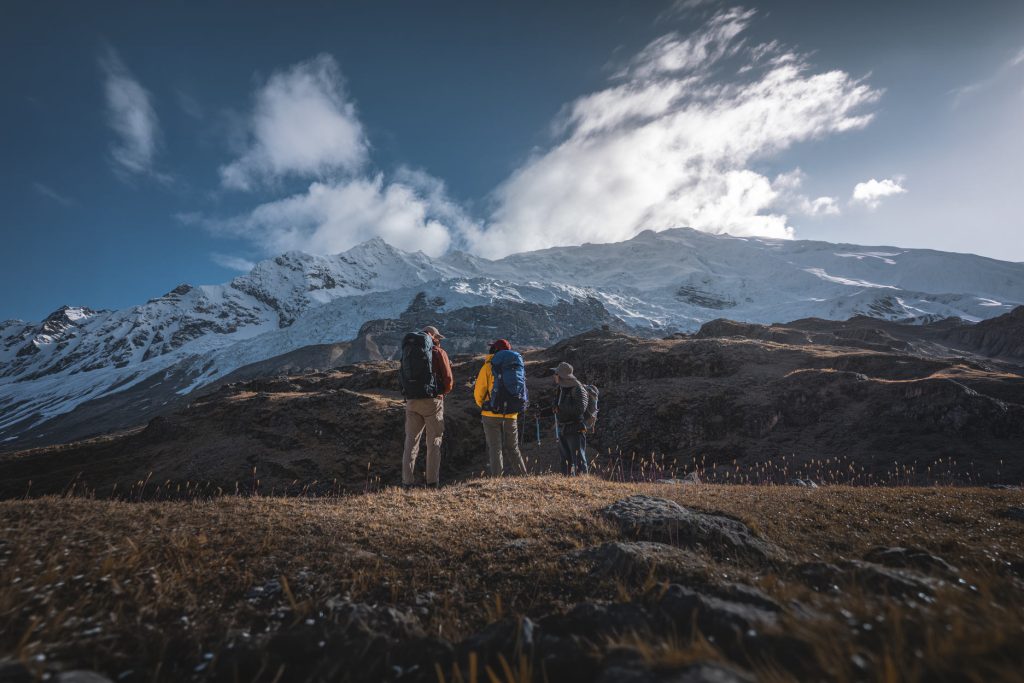
Its glaciers and snow-covered slopes dominate much of the trek.
Glacial Lakes
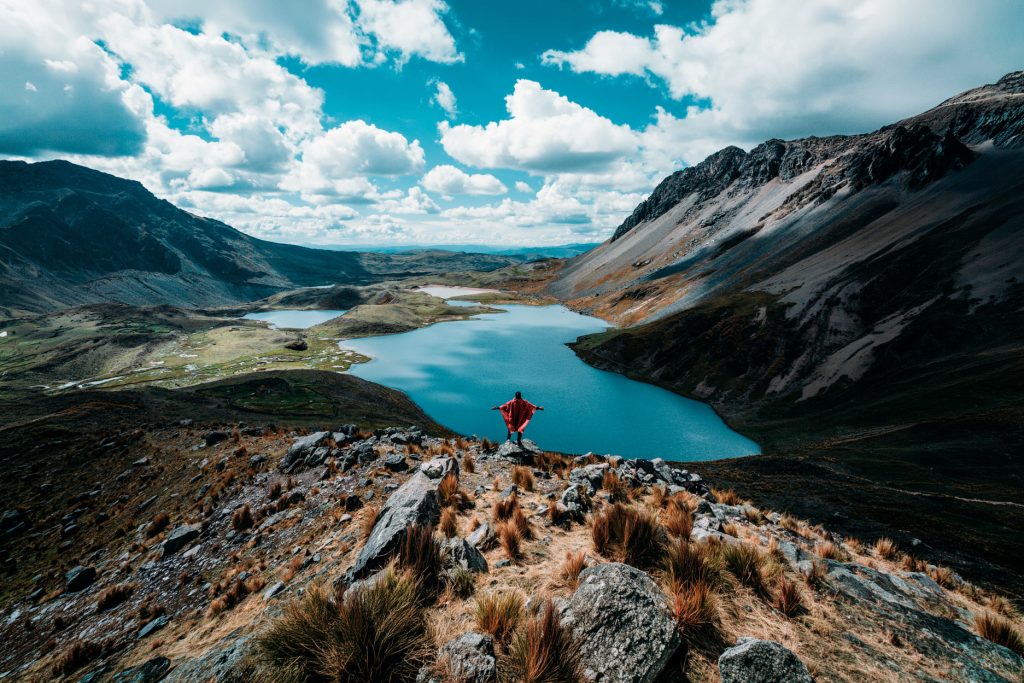
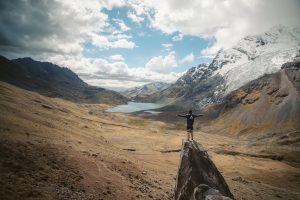
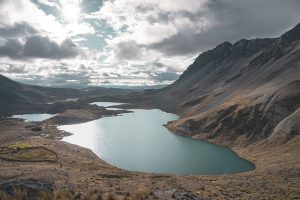
The region surrounding Ausangate contains spectacular high-altitude lakes in shades of turquoise, blue and green.
These lagoons are among the most memorable landscapes along the trail.
Andean Wildlife
Hikers regularly encounter animals adapted to life at high elevation, including:
- Alpacas
- Llamas
- Vicuñas
- Andean birds
Large herds of alpacas are especially characteristic of this part of the Andes.
Local Andean Communities
The Ausangate region is also home to remote Quechua communities where traditional clothing, agriculture and alpaca herding remain part of everyday life.
Traveling through these areas adds an important cultural dimension to the trek.
Rainbow Mountain: The Finale of the Adventure
Rainbow Mountain is often visited as a separate day tour from Cusco.
However, reaching Vinicunca through the Ausangate trekking route provides more context.
You’ve already walked through glacial valleys, crossed high mountain passes and watched the landscape gradually change color.
Rainbow Mountain isn’t an isolated attraction anymore.
It becomes part of the wider geography of the Vilcanota Mountain Range.
That is one of the main reasons travelers choose the Ausangate and Rainbow Mountain Trek instead of visiting both destinations separately.
Best Time to Hike Ausangate and Rainbow Mountain
Weather plays an important role when planning an Ausangate Trek in Peru.
Dry Season: April to October
The dry season generally provides:
- More stable weather
- Clearer mountain views
- Lower rainfall
- Better trail conditions
However, nights at high elevation can become extremely cold.
June, July and August typically bring some of the coldest nighttime temperatures.
Rainy Season: November to March
During the rainy season, travelers may experience:
- More clouds
- Frequent rain
- Snow at higher elevations
- Wetter trails
- Lower visibility
The landscape can become greener, but conditions are less predictable.
Some trekking companies may modify or suspend departures during periods of particularly difficult weather.
What to Pack for the Ausangate and Rainbow Mountain Trek
Packing correctly is especially important for a high-altitude trek.
Mountain weather can change rapidly, so hikers should prepare for sunshine, wind, rain, and cold temperatures during the same journey.
Essential Hiking Gear
Bring:
- Broken-in hiking boots
- Waterproof jacket
- Warm fleece or insulated jacket
- Thermal base layers
- Hiking pants
- Warm hat
- Gloves
- Sun hat
- Sunglasses with UV protection
- High-SPF sunscreen
- Reusable water bottle or hydration system
- Small hiking backpack
- Trekking poles
Useful Personal Items
Also consider carrying:
- Lip balm with sun protection
- Personal medication
- Camera
- Power bank
- Headlamp
- Snacks
- Wet wipes
- Hand sanitizer
- Extra socks
- Rain cover for your backpack
Packing in layers is one of the easiest ways to adapt to temperature changes throughout the day.
Tips for Your Ausangate Adventure
A few simple decisions can make your trek considerably more comfortable.
Walk at Your Own Pace
High-altitude trekking isn’t about speed.
Maintain a steady pace, especially when climbing mountain passes.
Stay Hydrated
You may become dehydrated quickly at high elevation, even when temperatures are cold.
Drink water regularly instead of waiting until you’re thirsty.
Eat Regularly
Altitude can reduce appetite, but your body still requires energy.
Eat small meals and snacks throughout the trek.
Protect Yourself From the Sun
UV radiation becomes stronger at high altitude.
Use sunscreen, sunglasses and a hat even when the weather feels cold.
Prepare for Cold Nights
Temperatures can fall rapidly after sunset.
Keep thermal clothing and warm layers easily accessible.
Respect Local Communities
Remember that the trail passes through landscapes where people live and work.
Respect private property, local traditions and the natural environment throughout your journey.
Shorter Ausangate and Rainbow Mountain Trek Options
Not every traveler has four days available.
Fortunately, there are shorter ways to explore this part of the Andes.
3-Day Ausangate and Rainbow Mountain Trek
A 3-day Ausangate Rainbow Mountain Trek keeps many of the principal landscapes while reducing the overall time on the trail.
It’s suitable for travelers who want a multi-day mountain experience but have limited time in Cusco.
2-Day Ausangate, Rainbow Mountain and Red Valley Trek
A two-day itinerary focuses more heavily on Rainbow Mountain and Red Valley.
It provides less immersion in the wider Ausangate region but can be a good option for travelers with tight schedules.
Who Is the Ausangate and Rainbow Mountain Trek For?
This route is particularly suitable for travelers who:
- Love mountains and remote landscapes
- Want a challenging trekking experience
- Enjoy multi-day hiking
- Prefer nature-focused adventures
- Want to explore beyond the standard Rainbow Mountain day trip
- Are interested in Andean culture
- Enjoy landscape photography
- Are comfortable camping at high altitude
- Want to experience one of Peru’s less crowded trekking regions
You don’t need technical mountaineering experience, but good preparation, reasonable fitness and proper acclimatization are important.
Ausangate and Rainbow Mountain Trek FAQs
How difficult is the Ausangate and Rainbow Mountain Trek?
The trek is generally considered moderate to challenging. Altitude is the main difficulty, as much of the route is above 4,000 meters / 13,123 feet.
What is the highest altitude on the trek?
Depending on the exact itinerary, trekkers can reach approximately 5,100 meters / 16,732 feet.
Do I need to acclimatize before hiking Ausangate?
Yes. Spending approximately 2–3 days acclimatizing in Cusco before beginning the trek is strongly recommended.
Is the Ausangate Trek technical?
No technical climbing is normally required on standard trekking routes, but the altitude, distance, terrain and weather make the trek physically demanding.
Where is Ausangate Mountain?
Ausangate is located southeast of Cusco in Peru’s Vilcanota Mountain Range.
Is Rainbow Mountain part of the Ausangate region?
Yes. Rainbow Mountain, or Vinicunca, lies within the wider high-Andean landscape associated with the Vilcanota range and can be incorporated into several Ausangate trekking itineraries.
Can beginners hike the Ausangate Trek?
Travelers with good physical preparation and previous hiking experience may be able to complete the trek successfully, but the high altitude should not be underestimated.
When is the best time for the Ausangate Trek?
The dry season, broadly from April through October, usually provides more stable trekking conditions and clearer mountain views.
Will I see Rainbow Mountain during the trek?
Yes. The itinerary is specifically designed to combine the Ausangate Trek and Rainbow Mountain in a single multi-day journey.
Is Red Valley included?
Some Ausangate and Rainbow Mountain itineraries also include or offer access to Red Valley, located near Vinicunca.
Experience Ausangate and Rainbow Mountain in One Journey
The Ausangate and Rainbow Mountain Trek is more than a way to reach Vinicunca.
It’s a journey through one of the wildest and most impressive mountain regions in Peru.
You’ll walk beneath glaciers, cross high Andean passes, discover turquoise lakes, encounter alpaca herds, travel through remote communities and watch the landscape change every day.
Then, after days of trekking through the Andes, you’ll finally reach Rainbow Mountain.
For travelers searching for a real Ausangate adventure, this route combines challenge, nature, culture and some of the most remarkable mountain scenery around Cusco into one unforgettable trek.

You might also like
Leave A Reply