
Rainbow Mountain, also known as Vinicunca, may seem like a geological masterpiece, but the real story begins long before hiking boots, tour buses, and sunrise selfies entered the scene.
This isn’t just a mountain. It’s a path. A cultural walkway. A high-altitude timeline stretching back thousands of years. One that’s shaped by Andean cosmology, resilience, and a deeply rooted sense of identity that refuses to be rushed, even when visitors absolutely are. And we get it, you’re short on time.
So today, we’re walking the Andean path to Rainbow Mountain properly. Not fast. Not out of breath. But thoughtfully, with curiosity, context, and just enough humor to keep things light when the altitude gets heavy.
Let’s go.
Table of Contents
Before It Was Vinicunca (Or Rainbow Anything)
Long before the name “Rainbow Mountain” existed, Vinicunca was simply part of a living landscape that sat in the Ausangate region, which is one of the most sacred areas in the southern Peruvian Andes.
The people here didn’t name mountains for their looks. They named them for their spirit, role, and power.
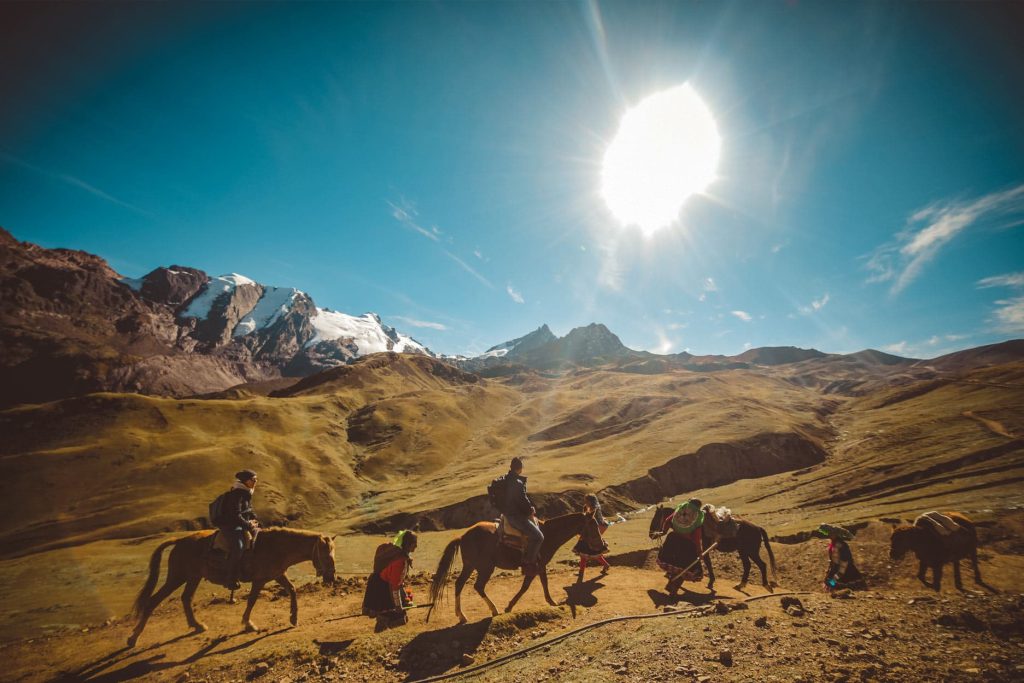
Vinicunca’s slopes were shaped by layers of minerals building up over time, but also by movement. Herders crossed these lands with the seasons. Families traveled along ancient routes that linked valleys, pastures, and ceremonial sites. Communities navigated the Andes not for leisure, but for survival, connection, and meaning.
The mountain wasn’t a destination. It was part of daily life.
There were no entrance tickets. No viewpoints. No one asking if the hike was “worth it.” Just altitude, weather, and purpose.
The Andes As A Belief System
To understand the Andean path to Rainbow Mountain, it helps to know something fundamental. In Andean culture, the landscape isn’t scenery, it’s family. You need to understand that:
- Apus are mountain spirits, guardians, and providers
- Pachamama is Mother Earth, responsible for crops, animals, and balance
- And the humans? Temporary caretakers with responsibilities, not owners with rights
Mountains like Ausangate are powerful Apus. They influence weather, harvests, and well-being. Locals don’t see the respect as an option. It makes logical sense if they want to enjoy the rewards.
Charging up a mountain for a quick photo would have made absolutely no sense in this view of the world.
Ancient Roads In High Places
The Andean path to Rainbow Mountain is part of a much larger network of pre-Inca and Inca trails that once held the Andes together.
These routes weren’t casual footpaths. They were carefully chosen walkways connecting different ecological zones, from high-altitude grasslands to fertile valleys.
They supported:
- Trading, like salt, textiles, and crops
- Seasonal livestock migration
- Religious pilgrimages to sacred mountains
- Long-distance communication
Footpaths followed the way the land lies, not convenience. Steep where they had to be. Gentle where possible. And always intentional.
Vinicunca wasn’t the headline attraction back then, but it was always present, always part of the journey.
Living At 16,000+ Feet
Living in the high Andes shapes identity in ways that are hard to explain unless you’ve personally felt your lungs argue with you.
Communities here developed:
- Exceptional weather resilience
- Sophisticated agricultural and herding techniques
- Deep communal bonds thanks to solid cooperation
At the heart of this identity is ‘ayni’, which is the principle of mutual aid. You help your neighbor today because tomorrow, a snowstorm, illness, or lost livestock might mean you need them.
This shared identity is still very much alive in today’s Quechuan villages. And it’s one of the reasons local communities were able to adapt so quickly when tourism arrived at Rainbow Mountain.
The Colonial Disruption And Cultural Survival
Spanish colonization, particularly in the 1500s, disrupted Andean life profoundly.
Sacred routes were given a new purpose. Indigenous belief systems were suppressed. Languages like Quechua were marginalized. Mountains that were once honored became resources to extract from.
But the Andes are stubborn. And so are the people. In a good way.
The cultural practices that had existed for generations didn’t vanish. They adapted. Ceremonies became quieter. Respect for the mountains continued privately. Communal decision-making survived behind closed doors.
The Andean path continued. Not as part of a museum, but as a living and breathing system that refused to be forgotten.
When The Snow Melted And The World Noticed
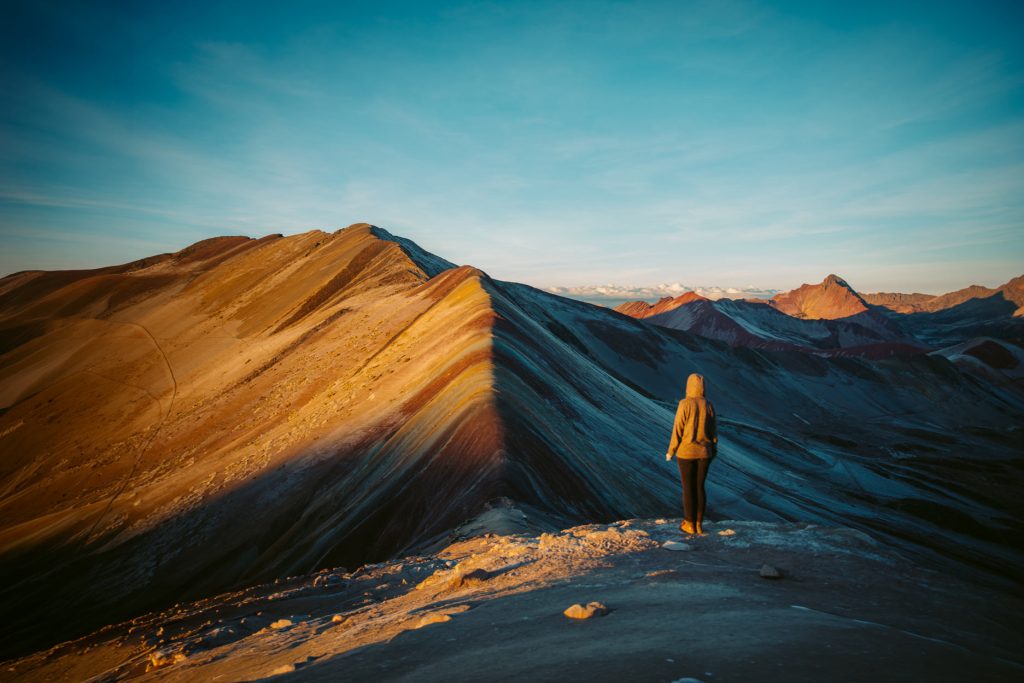
For centuries, Vinicunca was covered in snow. No one knew of its colorful shades beneath the ice. Then climate change happened.
As glaciers disappeared, mineral layers appeared. Suddenly, the mountain went viral. What had always been sacred land became a global sensation.
The Andean path was to transform yet again.
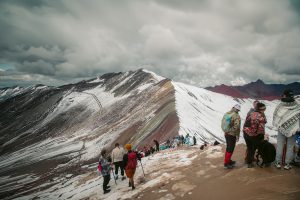
Where herders and pilgrims had once trodden became a trail for travelers chasing cool photos, high altitude, and bragging rights, and with good reason, of course.
Culture Meets Tourism
The arrival of tourism was fast. Sometimes chaotic. Always making an impact.
Local communities had to respond quickly by blending ancient values with a brand-new economic reality.
They organized:
- Trail access and maintenance systems
- Horse support for visitors struggling with altitude
- Food stalls offering warm meals and herbal teas
- Community-managed entrance structures
Crucially, they did this as a team, using the same communal decision-making that had guided them for generations.
The Andean path didn’t disappear. It adapted yet again.
Clothing, Color, And Cultural Signals
What many visitors see as “traditional clothing” is actually like a language in itself.
Hats, shawls, skirts, and ponchos communicate:
- Regional origin
- Community belonging
- Social and marital status
Colors matter. Patterns matter. Materials matter.
The bright hues around Rainbow Mountain aren’t just geological; they’re human. You’ll notice many similar colors and patterns between the stripes on the hills and those on traditional clothing. Oh yeah, and you might spot an alpaca or two sporting some fancy textiles, too!
Rituals Still Walk These Paths
Despite the crowds, Andean rituals are still deeply woven into life around Vinicunca.
Offerings to Pachamama continue. Mountains are still greeted with respect. Seasonal pilgrimages and ceremonial walks still happen, sometimes overlapping with tourist routes, and sometimes deliberately avoiding them.
The path holds multiple meanings at once. And that’s not a contradiction. That’s Andean logic.
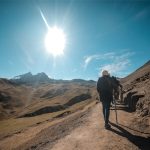
Walking The Path Today
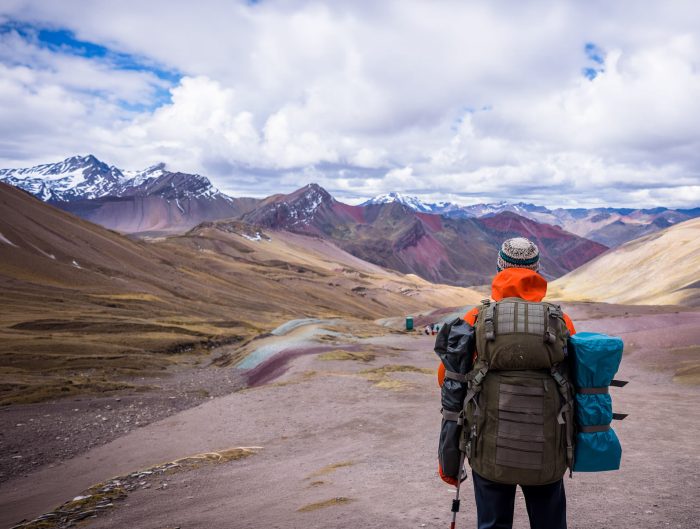
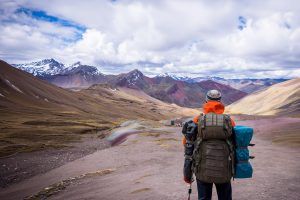
When travelers hike to Rainbow Mountain, they’re not just walking uphill at high altitude. They’re walking across:
- Ancient trade corridors
- Pastoral grazing lands
- Sacred geography
- A living cultural walkway
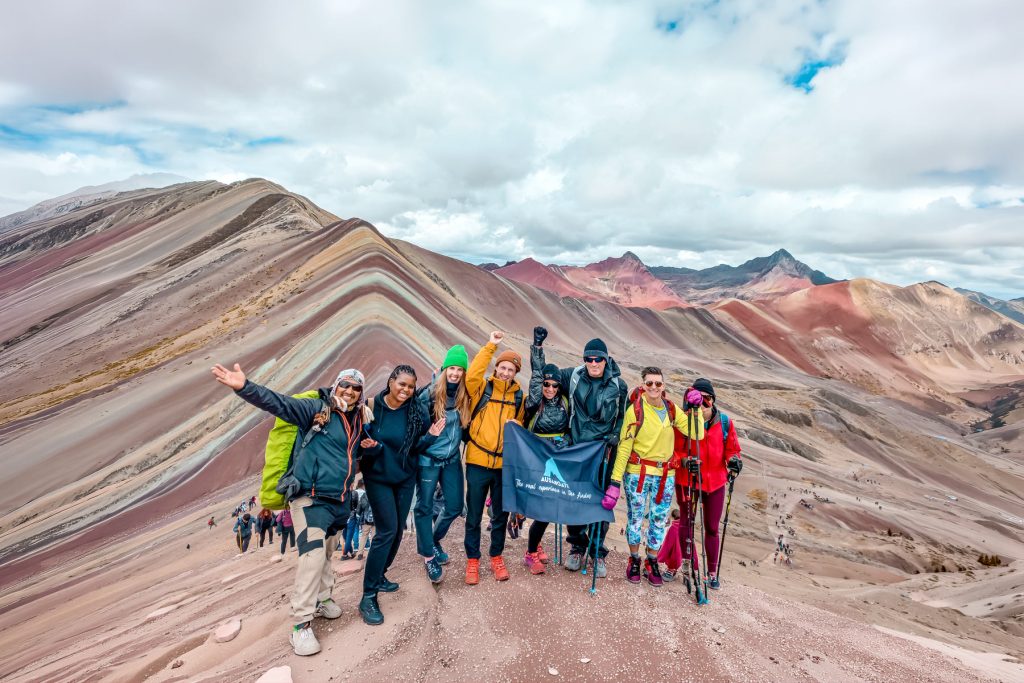
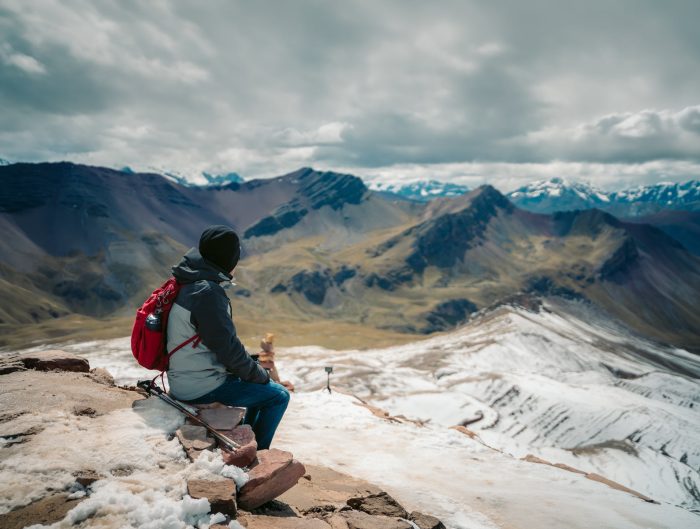
Knowing this changes the experience. A tough hike becomes a shared journey. A lookout point becomes a moment of connection.
Respect On The Andean Path (No, This Isn’t a Buzzkill)
Respect doesn’t mean being serious all the time. It just means being aware. We’re big fans of practicing responsible tourism, and you can do your part, too. Here are a few easy wins:
- Stay on designated trails
- Ask before photographing people
- Support community-run services
- Take away anything you bring in
Small actions have a big impact.
Identity In Motion
The Andean identity around Rainbow Mountain isn’t frozen in time. It’s always evolving by balancing tradition, tourism, climate change, and modern pressures.
Communities here aren’t museum exhibits. They’re active participants shaping what Vinicunca becomes next.
And the Andean path? It’s still moving forward.
It’s Your Time To Walk The Andean Path To Rainbow Mountain
Rainbow Mountain may draw people in with color but it keeps its meaning through culture.
The Andean path to Vinicunca reminds us that landscapes carry memories, and that every step taken here follows thousands before it.
So hike it. Enjoy it. Laugh when the altitude humbles you.
But remember. You’re not just reaching a viewpoint. You’re walking through history and culture.

You might also like
Leave A Reply