
Rainbow Mountain. Vinicunca. That jaw‑dropping, candy‑colored ridge you’ve definitely seen splashed all over social media.
But here’s the thing that most photos don’t tell you. Those stripes of red, gold, green, and lavender aren’t just a feast for the eyes. They sit in the shadow of something much bigger, much older, and seriously sacred. Yep. These guys are the Apus, and they’re the mountain spirits of the Andes.
Now, don’t get us wrong, we love a good sightseeing spot as much as the next adventurer, but we’re also big believers that places hit harder when you know why they matter. So let’s go beyond the colors, peel back the myths, and dive into the sacred meaning behind Rainbow Mountain and the powerful Apus watching over it.
Grab a coca tea. This one’s got soul.
Table of Contents
First Things First: What Is An Apu?
In Andean cosmology (ancient and modern), Apus are sacred mountain spirits. They’re seen as living, breathing protectors of the land and its people. They’re not just big rocks with snowcaps, even though they do look pretty cool towering above everything else. They’re considered wise, powerful beings that influence weather, harvests, health, and even luck.
Locals like to think of Apus as the original guardians of the Andes. Each major peak has its own personality, its own responsibilities, and its own relationship with the communities at its feet.
And yes, you read that right. People do still honor them today.
Locals offer what they call ‘despachos’ (small ceremonial bundles containing coca leaves, sweets, flowers, and prayers) to ask for protection, safe journeys, and balance. When locals hike near these sacred peaks, you’ll often see them pause, acknowledge the mountain, and say a quiet thanks.
No big speeches. No drama. Just respect.
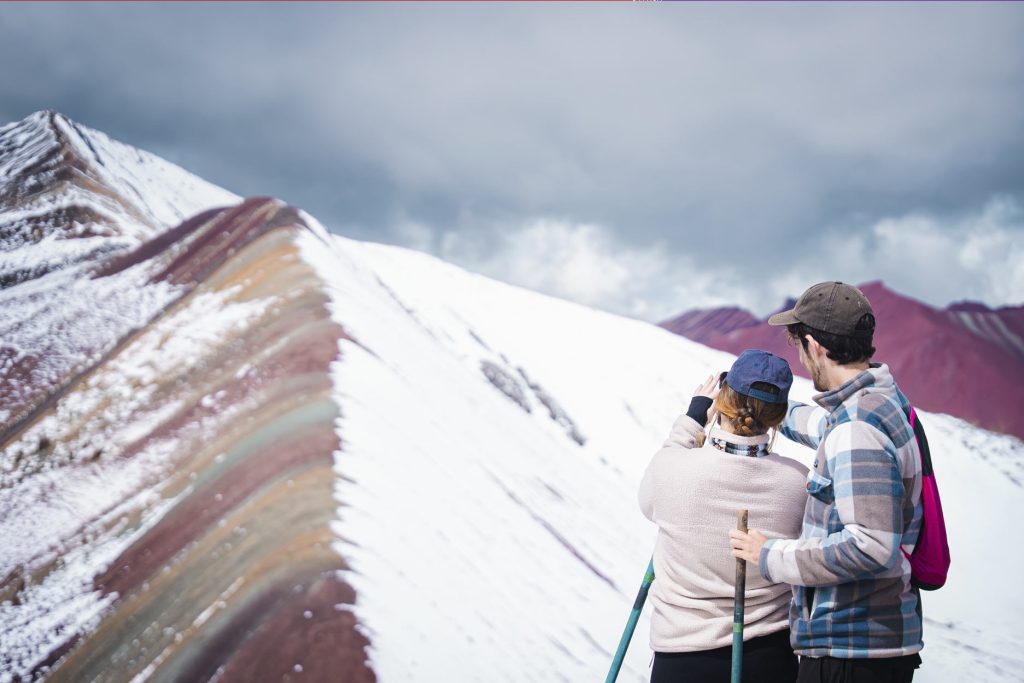
Rainbow Mountain: A Sacred Landscape, Not Just A Photo Opportunity
Rainbow Mountain didn’t suddenly become important when it went viral. Which, by the way, wasn’t actually that long ago. Long before tourists arrived on the scene in neon jackets and rented horses, this landscape held deep spiritual meaning for Andean communities.
The mountain’s natural colors are linked to Pachamama (Mother Earth), representing fertility, abundance, and harmony. Each mineral stripe is made up of elements in the earth and tells a story of time. It gives the kind of magical feeling the Andes are famous for.
Standing here isn’t just about beating the altitude or fancy aesthetics. It’s about being in a place where earth, sky, and spirit collide.
And once you know that? It hits different.
Meet The Apus Of The Rainbow Mountain Region
We’ve already mentioned that Rainbow Mountain doesn’t stand alone. It sits within a powerful network of Apus, each one shaping the energy of the region in its own way.
Let us introduce the heavy hitters.
Apu Ausangate: The Boss Of Southern Peru
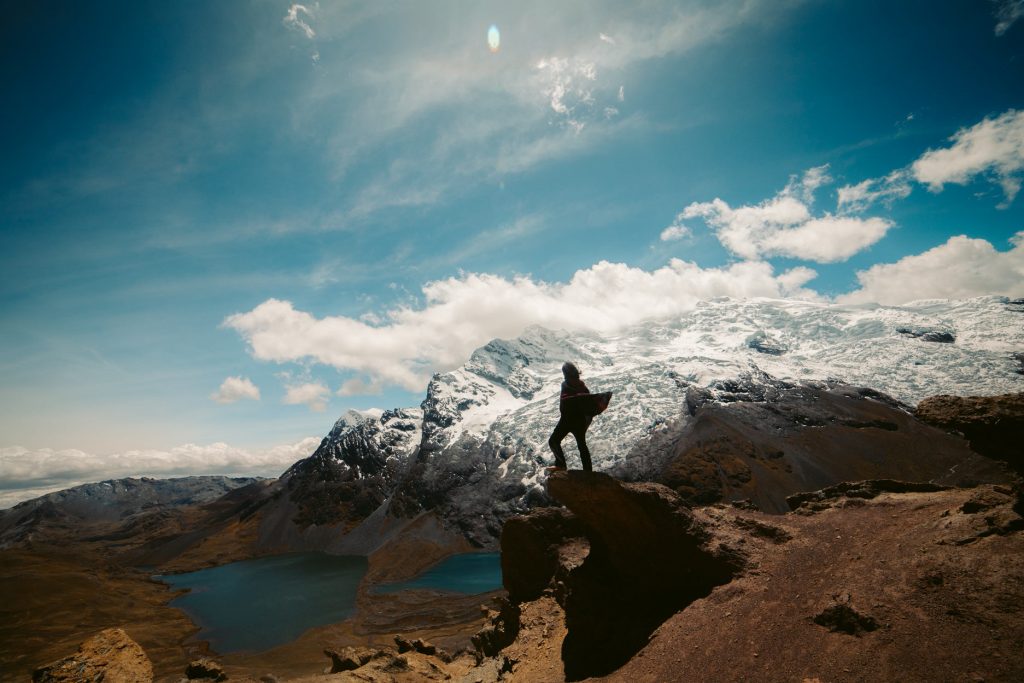
Towering at 20,940 feet (6,384 meters), Ausangate isn’t just another pretty peak. It’s one of the most important Apus in all of Andean spirituality.
Local communities believe Ausangate controls a whole host of things, like water sources, weather patterns, agriculture, and the overall balance of life in the region
It’s no coincidence that Rainbow Mountain lies in Ausangate’s domain. Many believe the vibrant colors are a physical manifestation of the mountain’s power spilling into the surrounding land.
If the Andes had royalty, Ausangate would be wearing the crown, for sure.
Apu Salkantay: The Wild Protector
Yes, that Salkantay.
Apu Salkantay is renowned for being a fierce protector. It’s strong, unpredictable, and deeply respected by local communities. While Ausangate represents abundance, Salkantay is associated with strength and endurance.
Travelers trekking near Salkantay often hear stories of sudden weather changes, powerful winds, and moments that feel… intentional. Coincidence? Perhaps. Or maybe the Apu is reminding you who’s really in charge.
Either way, it’s a mountain that commands respect and rewards it.
Apu Jalk’o And The Lesser Guardians
Beyond the famous peaks, there are plenty of smaller Apus that quietly watch over valleys, villages, and highlands. These guardians might not make guidebook covers (well, maybe sneakily in the background), but they’re just as important to local life.
Every hill, glacier, and ridgeline plays a role in maintaining balance and is a reminder that in the Andes, nothing exists in isolation.
Why The Andes Are Considered Alive
Western thinking often separates nature and spirituality. The Andes? Not so much.
The mountains listen here. Rivers remember. The land responds.
This worldview sees nature as an active participant in daily life. When crops fail or storms hit, they don’t see it as random chaos. It’s a sign that balance has been disrupted.
And here balance matters. A lot.
That’s why ceremonies, offerings, and rituals are still practiced in local communities, not as superstition, but as relationship‑building with the land.
When you hike to Rainbow Mountain, you’re not just walking in the Andes. You’re walking with them.
The Spiritual Side Of High Altitude
Let’s talk about altitude for a second. It’s impossible not to when you’re this high up.
Sure, the thin air will make your lungs work overtime, but many travelers report something else up there. A strange clarity, emotional openness, or quiet intensity.
Locals believe higher elevations bring you closer to the Apus and the heavens, giving you a deeper understanding of yourself
Is it the lack of oxygen? Maybe.
Is it the overwhelming scale of the landscape? Probably.
Is it the sense that you’re somewhere profoundly meaningful? Absolutely.
Visiting Rainbow Mountain With Respect (And A Little Soul)
We’re all for epic photos, but Rainbow Mountain deserves more than a quick snap and a sprint back to the bus. We know it gets cold, but hear us out:
Acknowledge The Land
Now, there’s no need for a full ceremony, but just take a moment. Pause. Look around. Appreciate where you are.
A quiet thanks goes a long way.
Leave No Trace (Seriously)
Trash, loud music, and off‑trail wandering don’t just harm the environment. They disrespect a sacred space.
Treat the mountain like someone’s home. Because, spiritually speaking, it is.
Learn Before You Go
Understanding what the Apus mean to the locals transforms a Rainbow Mountain visit from a checklist item into a meaningful experience.
And trust us, it’s way more memorable that way.
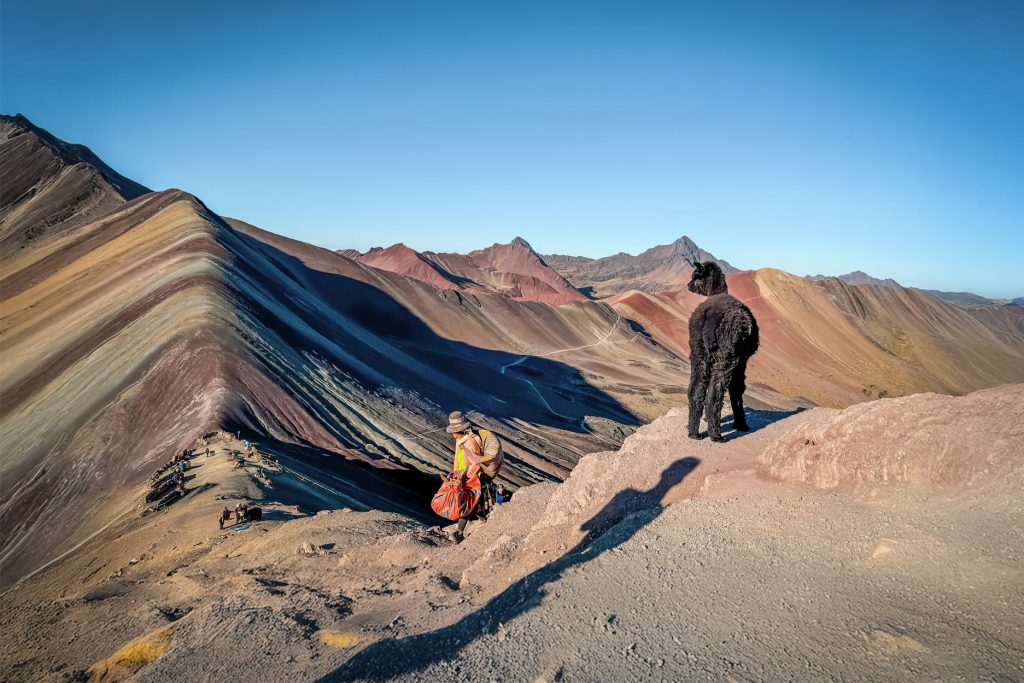
Rainbow Mountain Beyond The Hype
Yes, it’s popular. Yes, it’s busy. And yes, it’s still worth it.
But Rainbow Mountain isn’t just a viral sensation. It’s a sacred landscape shaped by time, belief, and powerful mountain spirits that continue to guide Andean life.
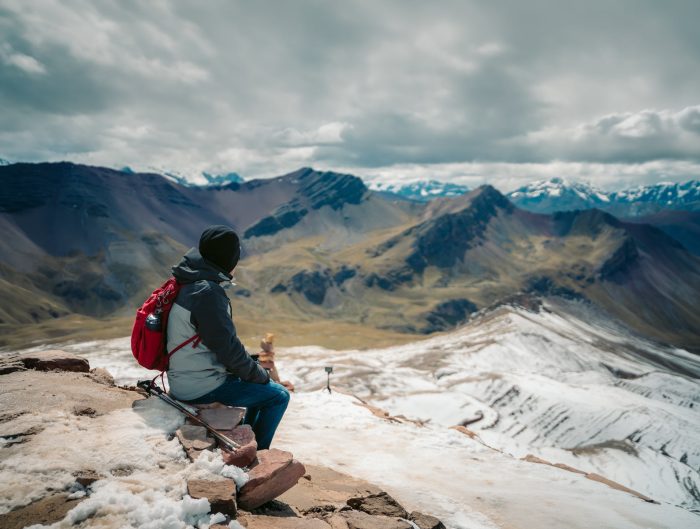
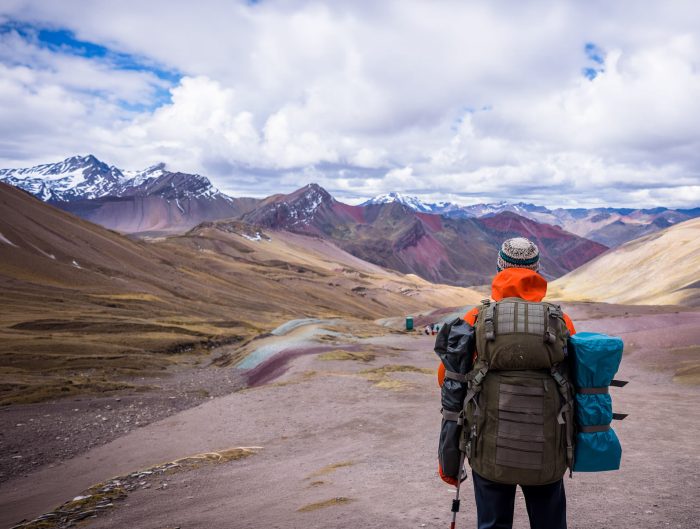
When you stand there, wind whipping, colors glowing, peaks stretching endlessly into the distance, you’re not just seeing something beautiful.
You’re witnessing a connection between earth and spirit that’s been ongoing for thousands of years.
And honestly?
That’s way cooler than any filter.
Experience The Sacred Andes The Right Way
We believe adventure is better when it comes with context, culture, and a little cosmic wonder.
Trekking with a tour operator doesn’t just take you to iconic places. It helps you understand them and respect them in the right way. From sacred mountains to ancient traditions, we’re here to make sure your journey through the Andes is as meaningful as it is unforgettable.
Ready to meet the Apus?
We’ll see you on the trail.

You might also like

Leave A Reply