
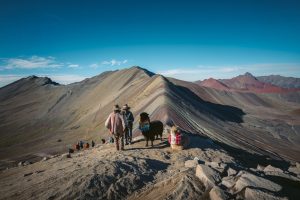
There are certain places in Peru where travellers simply stop in their tracks, blink twice, and immediately wonder whether they’ve wandered into some kind of high-altitude hallucination. Rainbow Mountain, or Vinicunca to the locals, is absolutely one of them.
We’ve watched countless hikers reach that final ridge and go wide-eyed, slack-jawed, and occasionally a bit emotional. And honestly? We get it. You don’t expect to climb thousands of meters into the Andes and find a natural artwork that looks like Mother Nature borrowed a paint palette and said, “Let’s have some fun with this one.”
But the real story behind Rainbow Mountain in Peru is even better than its photos. It’s dramatic. It’s ancient. It’s almost theatrical. And it’s one of those things that makes you appreciate just how outrageously creative the Earth can be when left to its own devices for a few million years.
So let’s break it all down as we look at the geology, the history, the chemistry, and the delightful weirdness that brought this technicolor wonder to life.
Table of Contents
Long Before The Selfies, Rainbow Mountain Was Underwater
It’s kind of hard now to picture Rainbow Mountain beneath the waves, but millions of years ago, that’s exactly where it sat. Instead of hikers struggling up snowy paths, you would have had fish drifting around and layers of sediment settling peacefully on the lakebed.
In fact, the Andean region has lived many lives, those being oceans, lakes, plains, and finally mountains. Each stage left behind layers of minerals. Sometimes thick, sometimes thin, sometimes iron-heavy, sometimes sandy.
Over time, these layers piled up into a multi-layered rocky lasagna. Only instead of cheese, meat, and pasta sheets, you’ve got minerals, mudstones, and sands. A delicious dish for any geologists out there, we think you’ll agree.
These sediments didn’t magically form the Rainbow Mountain colors on the spot. They simply settled quietly, minding their own business. The palette only emerges once you look at the minerals involved. Which brings us nicely to…
The Color Code: What Each Hue Actually Means
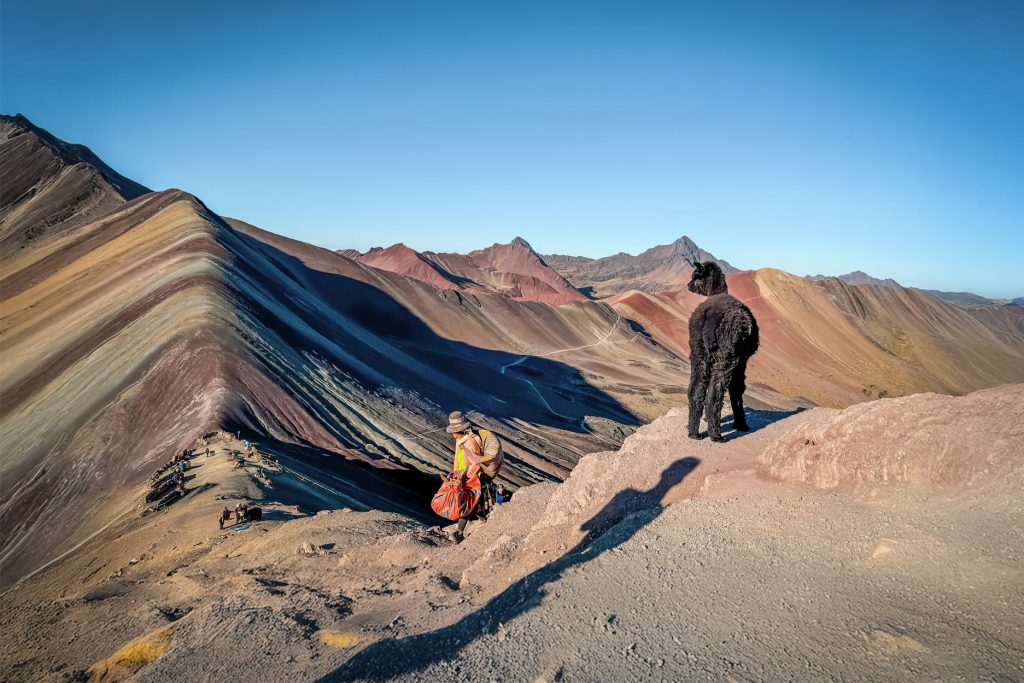
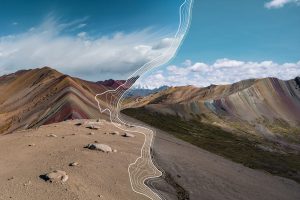
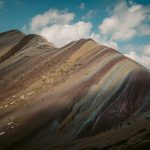
Rainbow Mountain isn’t painted, although if it were, the artist deserves an award. The colors come from minerals deposited over millions of years, each revealing a different chapter of the mountain’s past.
Let’s break down nature’s rainbow:
Red – Iron Oxide
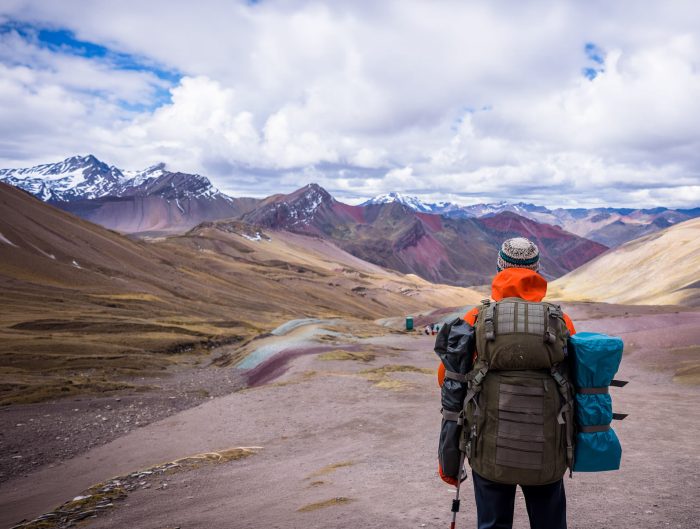
You know that deep rusty red you see in photos, especially in those of the Red Valley? That’s oxidised iron. The same chemical behind the color of Mars. So yes, Rainbow Mountain has a bit of an interplanetary vibe going on.
Yellow – Iron Sulphide
Pyrite and other sulphide minerals create golden or mustard-colored layers. It’s almost as if the mountain accessorised itself with jewellery.
Green – Chlorite
Chlorite minerals form in oxygen-poor, water-rich environments. Back in its underwater days, the mountain was basically marinating in the perfect conditions to create this shade.
White – Quartz Sandstone
Silica-rich rocks give us those bright white stripes. They’re a little like nature’s highlighter pen.
Purple – Goethite + Oxidised Limonite
These rare purplish stripes take things to a whole new level. They’re the result of iron minerals chemically transforming over time.
Brown – Rock + Soil Mix
The darker bands often come from mudstones or volcanic material. These dramatic layers add depth to the whole aesthetic.
Together? These minerals create a geological rainbow you didn’t know you needed in your life until you were standing right in front of it.
The Andes Rise And Everything Gets Weird In The Best Way
Once upon a tectonic time, the Nazca Plate crashed into the South American Plate. The result? The Andes shot upward in one of the most dramatic mountain-building processes on Earth.
This uplift tilted, folded, cracked, and exposed all those beautifully layered sediments. Imagine taking a neatly stacked cake and smashing one side upward until all the layers tilt. It becomes messy and dramatic but oddly beautiful. That’s exactly like Rainbow Mountain.
Without this tectonic chaos, the colors would still be hidden underground. Which is funny to think about now, considering thousands of hikers climb up each year to admire Mother Nature’s masterpiece.
The Great Reveal: Rainbow Mountain Emerges From The Ice
Here’s the plot twist: Rainbow Mountain only became famous in the last couple of decades. Why? For centuries, maybe longer, it was hidden beneath a thick cap of ice and snow.
As global temperatures warmed over the past few decades, the glacier melted and the colors below finally stepped into the spotlight.
This is why older maps don’t mention Rainbow Mountain. It simply wasn’t visible. Which feels kind of unfair to every traveller who came through Peru before people knew it existed.
The Altitude Factor: Why The Colors Stay Bright
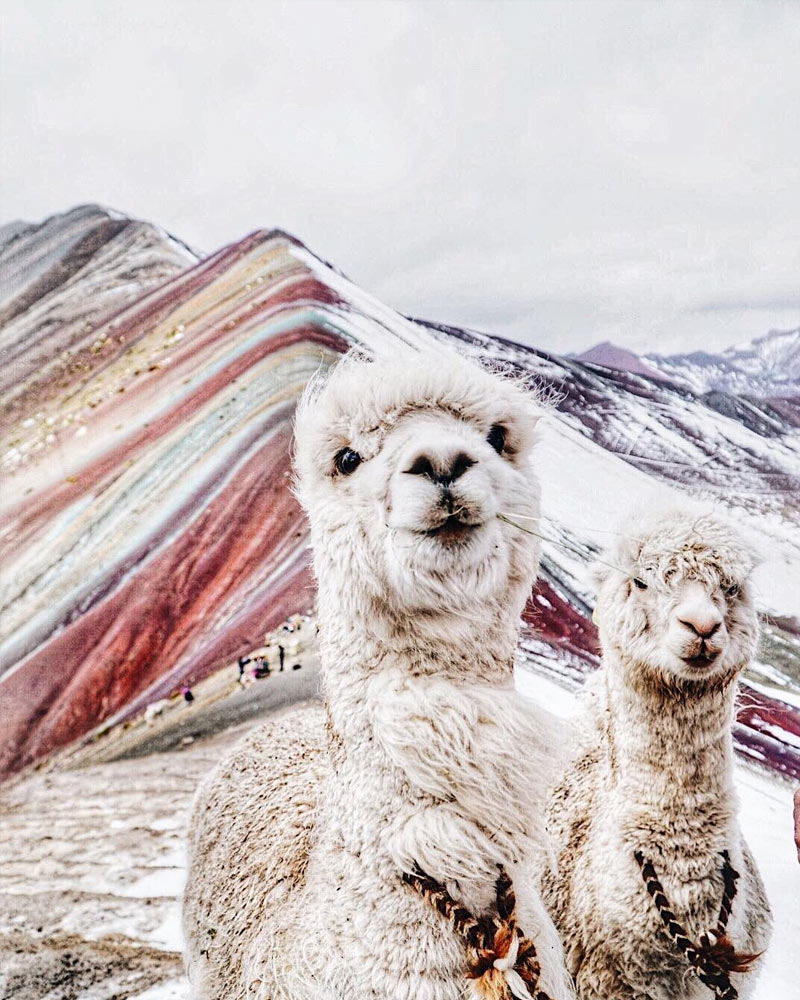
At over 5,000 meters above sea level, Rainbow Mountain is living the high life, literally. And this altitude is a huge reason the colors remain so sharp.
- Thin air means less moisture, so erosion is slow.
- Limited rain prevents the colors from washing out.
- Strong sunlight boosts saturation (your camera will love this).
It’s like the mountain lives in a natural climate-controlled showroom where the colors never really fade.
Why Rainbow Mountain Looks So Unreal In Photos
The first time people see Rainbow Mountain, the most common reaction is: “There’s no way it actually looks like that.”
But it does. And here’s why photos make it seem even more surreal:
- High-altitude light is intense and clear, like setting your camera to “200% sharp mode.”
- The mineral stripes create bold contrasts, which your brain isn’t used to seeing on mountains.
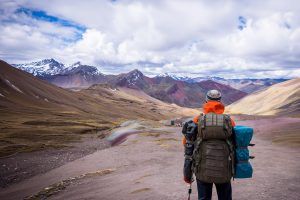
- The landscape around it is equally dramatic. Think glaciers, red valleys, roaming alpacas, and a sky that feels like it’s only a meter above your head.
Your eyes spend the first few minutes rethinking reality.
What The Layers Tell Us In Short
Each stripe hints at a different environment, era, or event:
- Ancient lakes drying up
- Volcanic ash settling
- Oceans retreating and advancing
- Shifts in climate from humid to arid to glacial
- Chemical reactions deep underground
Rainbow Mountain is basically the Earth’s history, but instead of words, it uses a kaleidoscope of minerals.
If these layers could talk, they’d have wild stories. (Probably about volcanic tantrums and marine mood swings.)
When To Visit For The Best Colors
For travellers aiming to see the mountain at that perfect moment, here’s the insider info:
Dry Season (May–September)
Bright colors, stable weather, incredible visibility. The classic and most popular choice.
Shoulder Months (April & October)
A bit of unpredictability, but the colors pop after light rain. You might get lucky and have a wonderful experience.
Rainy Season (Nov–March)
Drama guaranteed. Mud, clouds, and shifting shadows can tone down the colors, but you’ll also get moody, atmospheric photos that look like they belong in a travel magazine.
Just remember, whatever month you choose, the altitude remains… shall we say… enthusiastic. Go slow, hydrate, and don’t try to race the alpacas. They win every time.
Make The Most Of Your Trip With Our Tips From The Trail
- Start early for soft sunrise light and smaller crowds.
- Dress in layers. The weather changes faster than your Wi-Fi signal disappears.
- Bring coca candies or tea. Your lungs and stamina will thank you.
- Take it slow. Rainbow Mountain isn’t going anywhere.
- Respect the landscape. It took millions of years to look this good, so let’s keep it that way.
Why Rainbow Mountain Matters
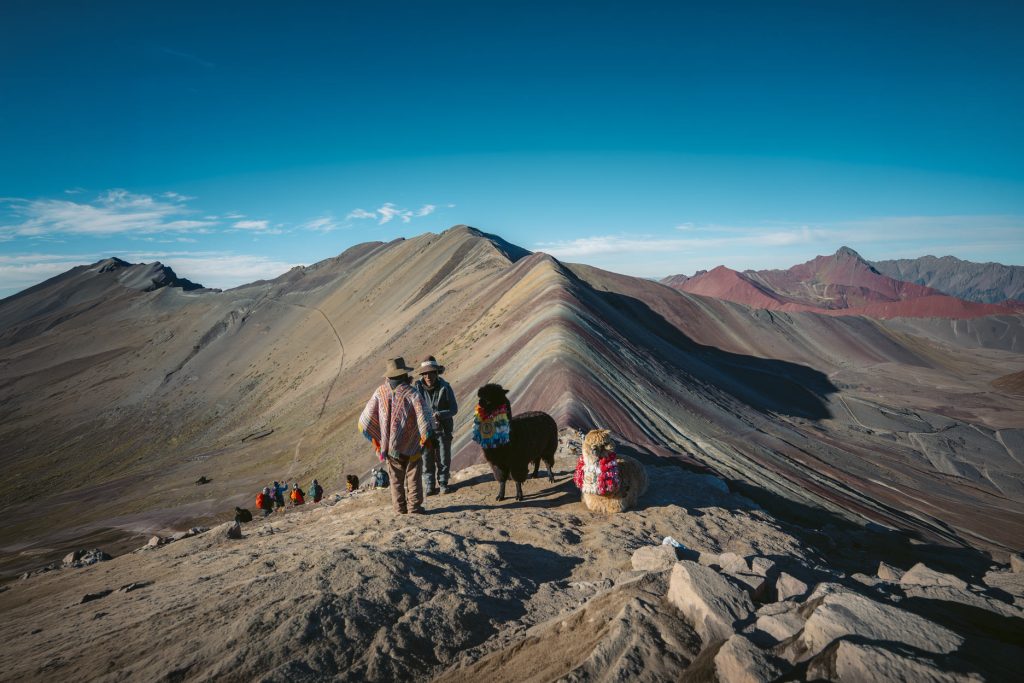
Beyond its visual “wow factor,” Rainbow Mountain is a symbol of how far the Earth has come over time. It’s a record of how landscapes shift, evolve, and reveal themselves.
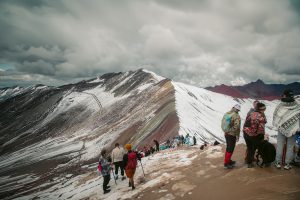
When you stand at the summit, cold wind whipping around you, alpacas posing like fluffy royalty, and that surreal mountain glowing in front of you, it’s impossible not to feel something.
Awe. Wonder. Curiosity. Gratitude. Oh yeah, and maybe a little breathlessness, but that’s probably the altitude talking.
A Geological Marvel Worth Every Step
Rainbow Mountain isn’t just a pretty view, far from it. It’s the story of ancient oceans, rising continents, minerals transforming deep underground, glaciers carving through rock, and climate shaping color.
It took millions of years for nature to perfect this rainbow, and seeing it in person is one of those rare experiences that stays with you long after your boots are off and you’re sipping hot tea again.
And if you’re ready to meet this masterpiece yourself, pop on your walking boots, pack your snacks, and get ready for some 5-star alpaca spotting.
Let the adventure begin.

You might also like
Leave A Reply